
Sell valuables to the fence at the dollar-sign van marked on your Looty Bay map, then protect the proceeds through banking and laundering. The sale itself does not make your money safe: cash can be stolen or confiscated, while banked funds have theft protection until the next wipe. Treat finding a buyer, collecting the payment, and protecting that payment as separate parts of the job.
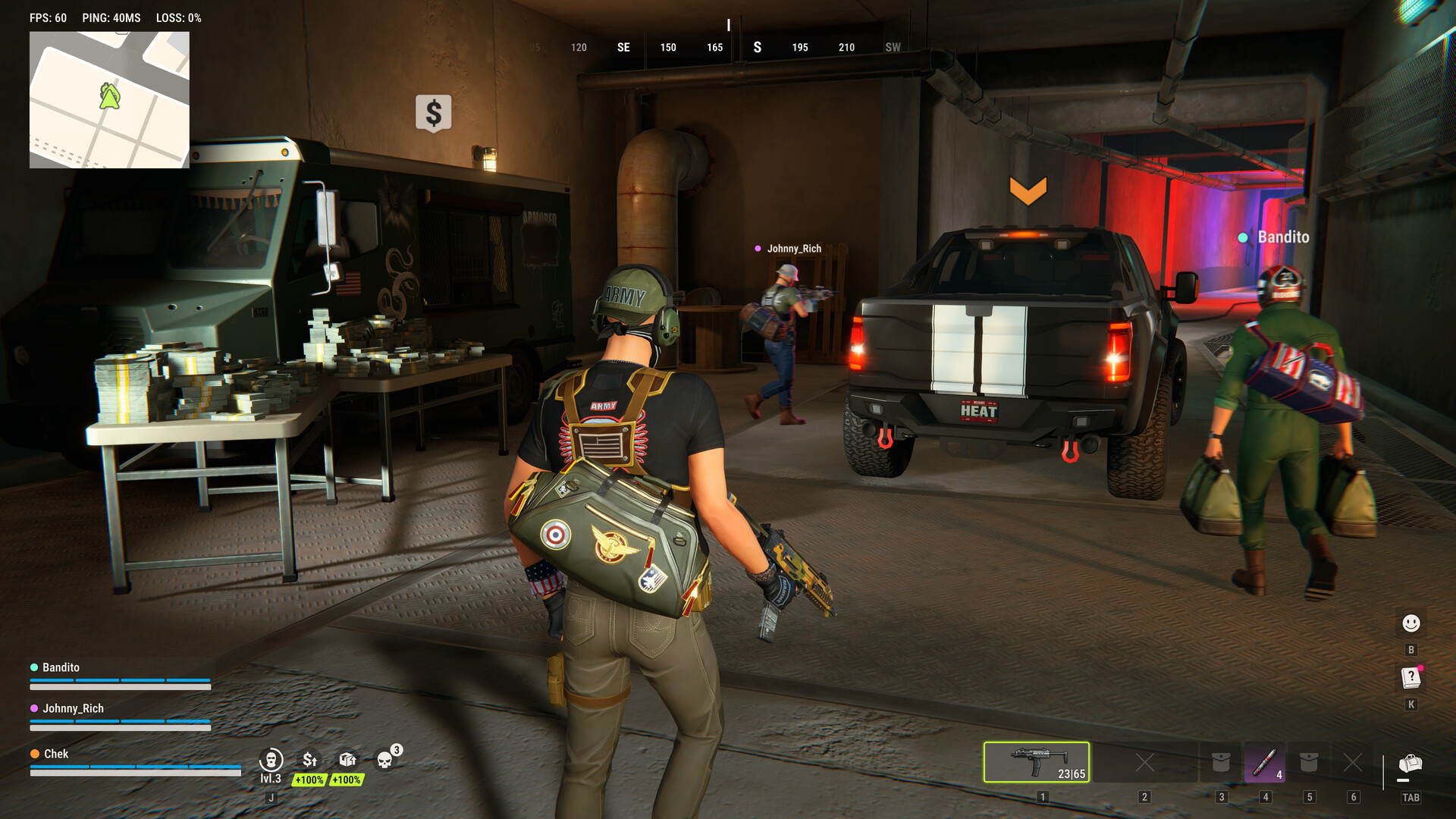
Where to sell valuables in Looty Bay
The official selling directions identify a van marked with a dollar sign on your Looty Bay map as a place to sell valuables. The fence at that van is the buyer for your valuables; use this map marker when deciding where to take items you want to turn into cash. Reaching this destination does not change the distinction between vulnerable cash and protected banked money, so arriving at the buyer completes only the selling part of your plan.
Before starting a robbery, consider how you will get away from the target as well as where you intend to sell the valuables. TposeGaming recommends scouting the target and the way out before putting on a mask, which gives you a chance to plan those movements in advance. Use that as preparation advice, rather than a promise that a particular journey from a target to the marked van will keep your inventory safe.
Collect the payment and protect your funds
According to TposeGaming's selling instructions, you must pick up the cash from the counter after completing a sale, so do not walk away without collecting it. The guide warns that money left on the counter can be stolen or confiscated, and says collected cash goes into your bag. Picking it up therefore removes the problem of leaving your payment behind, but it does not provide the theft protection associated with banked funds.
To open a bank account, visit Looty Bay Bank as a Civilian; the official instructions then direct you to process cash through the Laundering Desk at your base. Laundering takes time, so account creation and cash collection should not be mistaken for completion of the whole process described in those instructions. The stated benefit is protection against theft until the next wipe, which gives you a clear reason to follow through after selling your valuables.
You can withdraw cash at any ATM when you need access to money outside the bank, according to the official banking directions. Keep the cash-versus-bank distinction in mind when deciding to withdraw, because cash is the form of money the rules identify as vulnerable to theft or confiscation. For money you want to keep protected from theft, the relevant protection is its banked state and its stated limit at the next wipe.
Know the limits of storage before selling
If you are holding valuables rather than selling them immediately, your base is a place the official guidance recommends for storing stolen goods. That recommendation comes with a warning that other players can raid you, so base storage should remain part of a risk-management decision. Lenny serves a different purpose: only cash can be stored there, which means Lenny is not an alternative destination for depositing your unsold valuables.
Vehicle trunks also should not be treated as storage that other players cannot reach, since Black Market lockpicks can open other players' trunks, including police vehicles. For base defenses, TposeGaming says Security System fuses force attackers to spend more time and resources, while defense modules can alert your allies. Those measures can delay a raid or help draw attention to it, but the guide explicitly says they do not make you immune to raiders.
What death, surrender, and bribery mean for your loot
As a Criminal in Looty Bay, dying means losing your inventory, which matters while you are still carrying valuables intended for sale. The official rules say surrendering to Police can save your equipped gear, but that protection needs to be read separately from the contents of your bag. TposeGaming explains that surrender confiscates bag contents, so it is not a way to preserve the items or sale cash you are carrying there.
Bribery has a different condition: with money in the bank, you can offer a cop a bribe, according to the official instructions. If the cop accepts, you retain everything in your bag and the cop receives a payout, making acceptance central to the outcome described. Do not build a selling plan around guaranteed acceptance, because the rule describes a conditional offer rather than an assured way to keep your bag.
The desert has a separate death rule that matters if your plans take you beyond the city while you still have loot. Official guidance states that dying in the desert always means losing all your loot, without extending the city's Civilian death protection to that setting. Before treating a change of location as part of a safer selling plan, account for that loss rule alongside the Criminal inventory-loss rule in Looty Bay.
Civilian protection and clearing Criminal status
Civilians who die in the city keep their bag contents and equipped gear, making role and location important when interpreting the death rules. That is a specific protection against losses on death in the city, rather than a statement that every item or piece of cash is protected against theft. Keep it separate from banking: the official cash rules still distinguish money that can be stolen or confiscated from banked money protected against theft.
If you are already a Criminal, removing your mask does not clear that status, according to TposeGaming's explanation of the role system. The guide says you need to leave Looty Bay and choose your role again on the next visit, rather than relying on taking the mask off. This matters when planning a Civilian bank visit, but a role change itself should not be confused with the separate laundering process used to protect funds.
Better fence deals are separate from safe proceeds
A heist streak during a single city visit raises your Notoriety, and higher Notoriety brings better fence deals and unlocks more perks. Solo players and duos start with higher Notoriety, which the official explanation presents as help against Police squads and full crews. These are reasons to understand Notoriety when considering selling returns, but better deals do not change the stated rules for collecting or protecting your payment.