
In ROB RUN, banks and rival players' hideouts are confirmed robbery targets, while playtest accounts also describe an art gallery, posh houses, and a robbery near an armory. To commit robberies in Looty Bay, put on a mask, knowing that Police and other Criminals can attack you. Choose a target with an escape route in mind, because dying means losing everything in your bag.
Start with banks or rival hideouts
Banks are an officially named robbery option, alongside raids on rivals' hideouts, so both belong on your list when deciding where to rob. They involve different preparation: the robbery advice covers scouting a building and controlling staff, while the building-raid instructions specifically describe using a decoder on another player's Security System. Decide which kind of job you are preparing for before treating a building as your next target.
A rival hideout can contain stored loot and vehicles, with workbenches and safes among the things players can place in their bases. The official hideout description also warns that a more lavish refuge attracts more intruders, making these buildings part of the game's robbery landscape. That does not make an impressive base a guaranteed payday; approach it as another player's defended building, with entry access that its owners can revoke.
Look for galleries and houses described in playtests
An art gallery appears in a playtest account, where the player checks paintings described as purple and green and mentions more paintings upstairs. This gives you a specific kind of building to look for beyond the officially named banks and hideouts. If you encounter that gallery in your version, remember the upstairs observation when inspecting it, while treating the reported colors as examples from that session.
The same playtest commentary says gold-quality paintings can be found in posh houses, giving housing a place on your search list as well. That is a player's report from testing, rather than a promise that every expensive-looking home contains a gold painting. The commentator also reports obtaining a mansion key, but that observation alone does not explain which door it opens or show the entry process.
Keys appear in other playtest observations too: one commentator says desks can yield items such as keys, and another describes a Safe key for a gas station safe. These are useful clues when reading an item's purpose, rather than reasons to assume every key works on every locked target. A separate account describes choosing a robbery near an armory and leaving as an alarm sounds, so that example carries an alarm warning alongside the location clue.
Prepare and scout before putting on your mask
If you need starting money before choosing a robbery target, a playtest account describes scavenging trash cans and finding cash among the items recovered. This is an alternative preparation activity to consider before masking up, rather than another example of raiding a house or holding staff at gunpoint. The account reports cash coming out of a bin during that session, so use it as a possible starting option without budgeting your next job around a fixed return from each container.
The official preparation advice is to scout both the building and your getaway route before masking up. Use that order when considering a bank or another robbery location: examine the target first, then decide whether you are ready to commit. Putting on the mask lets you carry out robberies, but it also leaves you open to attacks from both Police and other Criminals in Looty Bay.
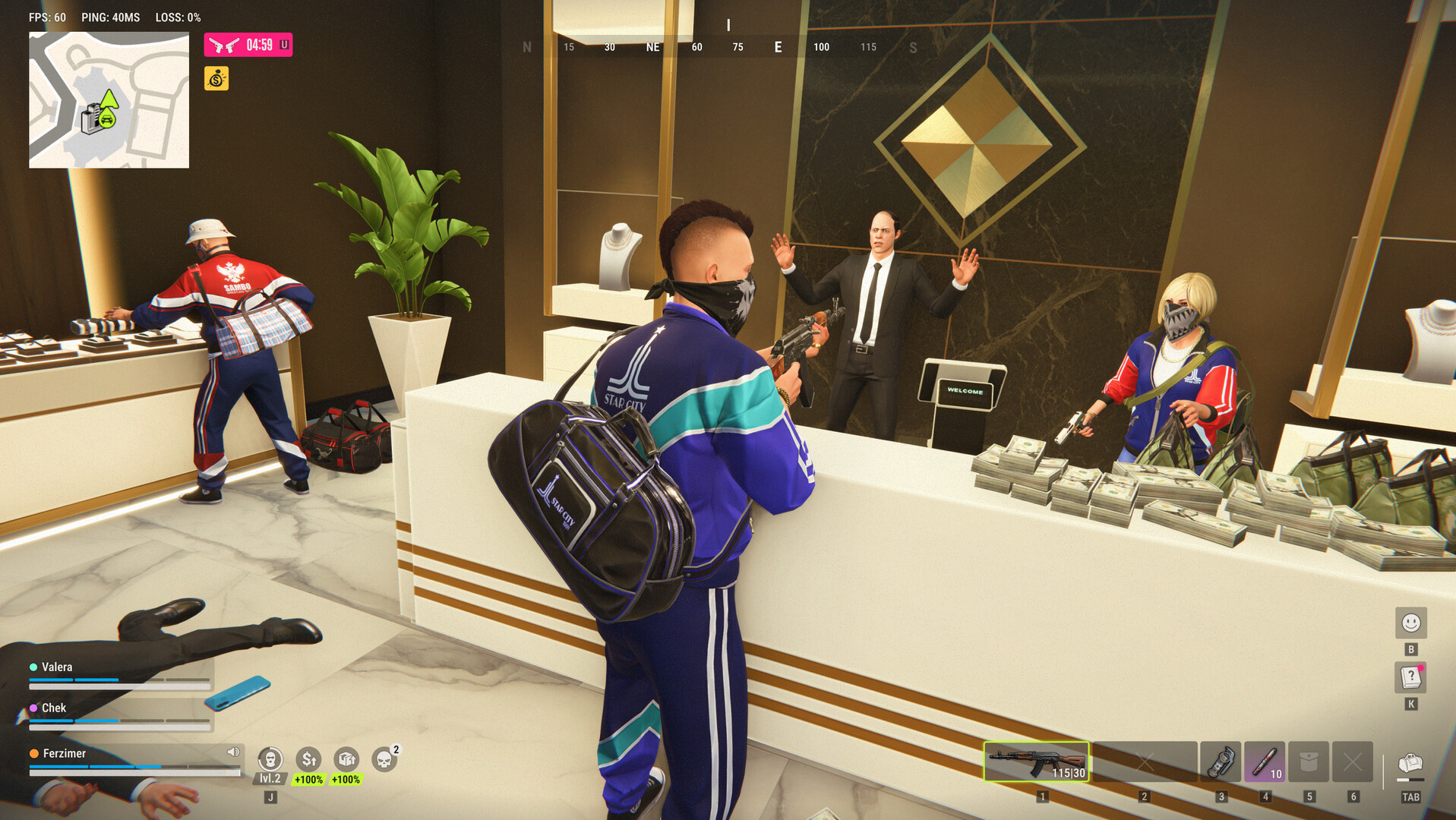
During a heist involving staff, the official advice is to keep them at gunpoint so they do not raise the alarm. A playtest commentator separately recommends locating cameras before starting and warns that cameras left unshot can trigger an alarm. Keep those instructions tied to what you find in the building, since the camera observation comes from a test session and does not establish that every possible target has the same security setup.
Use a decoder when raiding another player's building
For a rival player's building, the official entry method is to use a decoder on that player's Security System. The access this grants is temporary, and the owners can repair the system to lock you out again. Prepare around that temporary opening rather than assuming that decoding the system gives your group permanent access to the building or prevents its owners from responding.
The mansion key mentioned in playtest commentary should not be treated as a replacement for this decoder step. The player reports having the key, whereas the official rival-building instructions name a decoder and the Security System as the way to gain access. Keep those entry situations separate when planning a housing robbery: a reported mansion key and temporary access to a player's base describe different things.
Split the work and plan when to leave
Teammates can divide the work of breaking in, hauling loot, and providing cover, according to the official heist advice. If you are planning a raid with others, agree on those responsibilities while scouting the target and the getaway route. For more organized groups, the game also supports creating or joining a clan, assigning roles, organizing raids, and negotiating truces, giving repeated group raids an established social framework.
One playtest commentator recommends stealing near an exit instead of traveling around the city, which is a route-planning suggestion you can consider after scouting. Proximity to an exit is not a safety guarantee, particularly when Police and Criminals are played by real people with their own agendas. Also consider whether to extend your trip: consecutive heists during a single city visit raise Notoriety, while leaving the city is the required way to clear Criminal status.
Know where your stolen goods will go
After collecting valuables, look on the Looty Bay map for a van marked with a dollar sign, or go to the fence at the Sales Center to sell them. If you want to store stolen goods instead, the official instruction is to use your base. Lenny's accepts cash only, so do not plan a robbery around leaving stolen items there; selling valuables and storing stolen goods are separate options.
Your base remains vulnerable to raids by other players, so moving goods there does not make them permanently secure. While you are carrying loot, death costs everything in your bag, making the journey away from the target part of the robbery decision. When you leave the city, you can clear Criminal status and choose your role again on your next entry, which gives you a clear stopping point after deciding how to handle your haul.